Strong winds lead to power outages, damage, and at least one death with wild March weather arrives
HARRISBURG, Pa. (AP) — A severe weather event swept across the eastern United States on Saturday, leaving hundreds of thousands of people without power due to high winds that traveled eastward from the Great Lakes region. The strong gusts caused widespread damage, including downed trees and structural harm to homes and businesses. In a separate incident, a deadly wildfire in Nebraska was fueled by powerful winds, resulting in at least one fatality.
As of late afternoon, approximately 346,000 customers in Ohio, Pennsylvania, and Michigan were still experiencing power outages, according to PowerOutage.us, which monitors nationwide disruptions. The National Weather Service reported that a wind gust of 66 mph (106 kph) was recorded at Pittsburgh International Airport on Friday, marking it as the fourth-strongest non-thunderstorm-related gust in the area's history. Cleveland Burke Lakefront Airport experienced even stronger winds, with a peak of 85 mph (137 km/h).
The impact of the winds was felt across several regions. A gas station canopy collapsed in New Franklin, Ohio, while an auto parts store sign was toppled in Baldwin, Pennsylvania. Trees and branches fell onto homes and vehicles in areas ranging from Cleveland to Pittsburgh. In Niles, Illinois, a suburb of Chicago, the roof of a school building sustained significant damage due to the force of the wind.
In Nebraska, high winds intensified wildfires that spread rapidly across vast stretches of grasslands and range areas. Officials confirmed one death in Arthur County, though details about the victim remain undisclosed. The fire, referred to as the Morrill County fire by state officials, has burned at least 735 square miles (about 1,880 square kilometers) across four counties. According to the Nebraska Emergency Management Agency, 12 structures have been destroyed so far.
Chelle Ladely, a resident of Sidney, described her concerns for friends and family living closer to the fire zone. "Smoke is filling the air, and at night I can see the burn of the fires on the horizon," she said. Ladely’s father, a crop agronomist, and other local farmers are working together to provide water trucks and supplies to volunteer firefighters battling the flames.
Additional wildfires, driven by winds reaching up to 65 mph (105 kph), added another 225 square miles (about 580 square kilometers) to the total burned area by midday Saturday. The Nebraska Emergency Management Agency noted that the strong winds have made it difficult for firefighters to contain the blazes. Governor Jim Pillen visited affected areas to assess the situation.
Meanwhile, in Chicago, thousands gathered to celebrate St. Patrick's Day despite the threat of snow and frigid winds. The city’s namesake river was dyed bright green, and a downtown parade took place. However, the weather conditions created dangerous travel conditions, with feels-like temperatures dropping well below freezing.
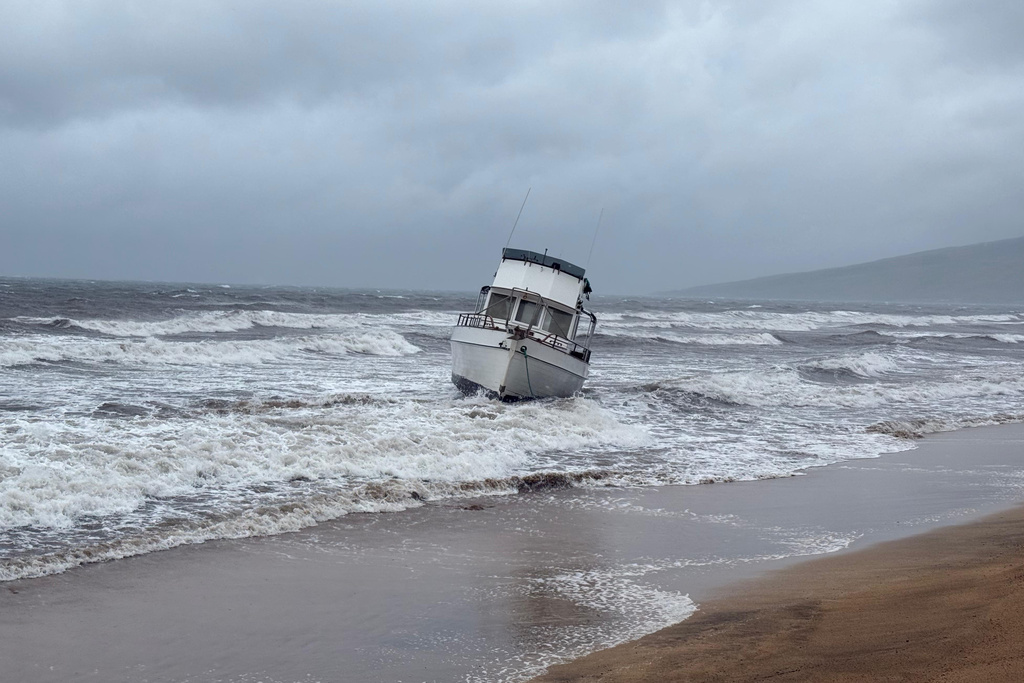
The weather event was part of a broader pattern of extreme conditions. Heavy rains hit Hawaii, while Phoenix is expected to face triple-digit heat next week. The Midwest and Northeast also experienced a return of winter cold, with Chicago forecasted to reach near single digits Fahrenheit by Tuesday. Minneapolis could see lows around zero degrees Fahrenheit (minus 18 C).
Several cities in Minnesota have declared snow emergencies ahead of what could be the season’s largest snowfall. Wisconsin and Michigan’s Upper Peninsula are also bracing for heavy snow. AccuWeather warned of a “potent triple-threat March megastorm” affecting the region from Sunday into Monday.
John Feerick, a senior meteorologist at AccuWeather, described the weekend as highly active, with a “highly amplified pattern” leading to extreme weather conditions. He noted that Hawaii is currently facing heavy rainfall, and parts of the Wisconsin-Iowa border may experience ice, making travel hazardous.
Beck reported from Omaha, Nebraska.


